
Using AI to create marketing videos Enhanced Strategies

Using AI to create marketing videos

Using AI to create marketing videos opens up a world of innovative possibilities that can elevate your marketing strategy. As the digital landscape evolves, integrating artificial intelligence into video production not only streamlines the creative process but also enhances engagement with your target audience. In this exploration, we’ll delve into how AI technologies can transform video marketing, making it more efficient and impactful.

From cutting-edge tools that simplify the creation of stunning visuals to algorithms that analyze viewer behavior, AI is changing the game for marketers. With examples of successful campaigns leveraging AI-generated content, we’ll see how businesses are effectively utilizing these advanced technologies to capture attention and drive results.

Using AI in Video Marketing

The integration of artificial intelligence (AI) in video marketing has revolutionized how brands create, distribute, and analyze their marketing content. AI not only streamlines the video production process but also enhances the personalization and targeting of video campaigns, making them more effective in reaching specific audiences. As businesses seek innovative methods to engage consumers, AI stands out as a powerful tool transforming video marketing into a more dynamic, data-driven practice.AI plays a crucial role in enhancing video marketing strategies by automating various aspects of video creation and distribution.

From scriptwriting and video editing to audience analysis and performance tracking, AI tools help marketers save time and resources while producing high-quality content. These tools utilize machine learning algorithms to analyze viewer preferences, optimize video formats, and deliver personalized recommendations. The result is a more tailored viewing experience that resonates with audiences and boosts engagement rates.

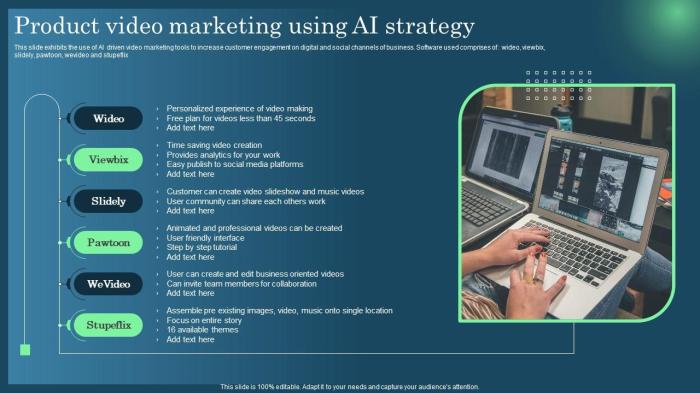
AI Tools for Creating Marketing Videos

A variety of AI tools are available for marketers aiming to enhance their video content. These tools facilitate the entire video production process, from ideation to execution. Below are some notable AI-powered tools that are making a significant impact in the marketing landscape:

  • Wibbitz: This tool enables marketers to create short-form videos quickly by transforming text content into engaging video summaries. Wibbitz utilizes AI to select relevant images, videos, and music, ensuring a professional look with minimal effort.
  • Promo: Promo leverages AI to help marketers create promotional videos using customizable templates. The platform provides access to a vast library of stock footage and allows users to add text overlays and music to enhance their messaging.
  • Lumen5: Lumen5 is designed for content marketers looking to convert blog posts into videos. It uses AI to suggest visuals and format the content, making the process faster and more efficient.
  • Magisto: This AI-driven video editing tool allows users to create polished marketing videos by analyzing uploaded footage and automatically editing it to fit a selected style. Magisto’s AI can identify the most engaging segments of video footage, resulting in compelling marketing content.

Successful marketing campaigns have effectively utilized AI-generated videos to achieve impressive results. A notable example is the campaign by BMW, which employed AI to analyze customer data and preferences, allowing them to create highly personalized video advertisements. By tailoring video content to specific viewer segments, BMW significantly increased viewer engagement and conversion rates.Another successful instance is Coca-Cola, which used AI to produce short animated videos for their social media channels.

These videos were generated based on trending topics and user-generated content, leading to higher interaction rates and brand visibility in a crowded marketplace.

“The future of marketing lies in personalization, and AI is the key to achieving that goal.”

As brands increasingly turn to AI for video marketing, the technology is set to become an integral part of their promotional strategies, shaping the future of how we connect with consumers.

Integrating AI with Social Media
Using AI to create marketing videos

Utilizing AI in social media marketing has transformed how brands connect with their audiences. With AI-generated videos, businesses can create engaging content that resonates with users, enhances brand visibility, and drives conversions. This integration can streamline marketing efforts across various platforms, making video content not just a trend but a necessity in digital marketing strategies.AI-generated videos can be seamlessly utilized in social media marketing campaigns through several innovative methods.

These methods enhance audience engagement and optimize content for specific platforms. AI tools can analyze user behavior and preferences, allowing brands to tailor their video content for maximum impact. Examples include personalized video ads that respond to user interactions and AI-generated video summaries that cater to different social media formats.

Utilization of AI-Created Videos in Social Media Campaigns

The use of AI-created videos in social media is not just about producing content but strategically crafting it to fit various platforms. Here are key methods for integrating such videos into campaigns:

  • Targeted Ad Campaigns: Leverage AI to create personalized video ads based on user data, ensuring relevance and increasing engagement rates.
  • Content Curation: Use AI tools to analyze trending topics and create videos that are timely and relevant, enhancing shareability.
  • Automated Highlights: AI can generate highlight reels from longer videos, making it easier for users to consume content quickly, especially on platforms like Instagram and TikTok.
  • Performance Tracking: AI algorithms can track video performance across platforms, providing insights that help refine future video content strategies.

Popular Platforms Benefiting from AI-Generated Video Content

Several social media platforms stand out when it comes to the utilization of AI-generated video content. These platforms not only support video formats but also enhance user engagement through intelligent algorithms. Notable platforms include:

  • Facebook: With its vast user base, AI-generated videos can help brands create targeted ads and engaging stories that capture user attention.
  • Instagram: Short, eye-catching AI videos can thrive in feeds, stories, and reels, appealing to younger audiences who favor quick content consumption.
  • TikTok: The platform thrives on creative, entertaining videos, and AI can assist in generating unique content that aligns with trending challenges.
  • YouTube: AI can optimize video recommendations, ensuring that well-crafted content reaches the right audience effectively.

AI Analysis of Social Media Trends for Video Optimization

AI’s ability to analyze social media trends plays a crucial role in optimizing video content. This analysis involves gathering data from various sources, including user engagement metrics, trending topics, and platform-specific algorithms. The following points detail how AI can enhance video content creation:

  • Trend Identification: AI tools can identify emerging trends in real-time, allowing brands to create relevant videos that align with current interests.
  • Sentiment Analysis: By analyzing user comments and reactions, AI can provide insights into audience sentiments, guiding brands on how to adjust their messages.
  • Content Performance Prediction: AI can predict which types of video content are likely to perform best based on historical data, helping in content planning.
  • Engagement Optimization: AI tools can suggest optimal video lengths, styles, and times for posting, maximizing viewer engagement based on analyzed user behavior.

The Impact of AI on Web Design and Development

Using AI to create marketing videos

The integration of AI into web design and development signifies a transformative shift in how websites are conceived, built, and maintained. AI-generated videos, in particular, have emerged as a dynamic tool that not only enhances user engagement but also streamlines the design process. As teams leverage AI to produce compelling video content, they are able to focus on high-level design strategies rather than getting bogged down in repetitive tasks.AI-generated videos play a critical role in web design projects by providing rich media that can convey complex ideas effectively.

These videos can be tailored to the brand’s voice and audience preferences, delivering personalized experiences that boost visitor retention. By employing AI to automate video production, designers can quickly iterate on concepts, allowing for a more agile and responsive design process.

Guidelines for Integrating AI Video Content into Website Development

Integrating AI video content into website development requires careful planning to ensure that the final product aligns with both user experience and technical requirements. Below are guidelines to effectively incorporate AI videos into web projects:

1. Define Purpose and Goals

Clearly Artikel the objectives of using AI-generated videos. This could include marketing campaigns, educational content, or product demonstrations.

2. Choose the Right Tools

Select AI tools that align with your needs, such as video editing software that offers automation features and user-friendly interfaces.

3. Optimize Video Format

Decide on suitable video formats (like MP4 or WebM) that are compatible across different browsers and devices.

4. Implement Best Practices

Use meaningful titles, descriptions, and s for videos to enhance search engine visibility.

5. Assess Loading Times

Ensure that videos are optimized for fast loading to improve user experience and reduce bounce rates.

6. Maintain Brand Consistency

Ensure that the style, tone, and messaging of the AI-generated videos are consistent with the overall brand identity.

Importance of Responsive Design for Video Content on Various Devices

Responsive design is essential when incorporating video content into websites, as it ensures that videos display correctly across a range of device sizes and resolutions. With an increasing number of users accessing websites via mobile devices, it’s vital that video content adapts accordingly. Below are essential aspects to consider for responsive video design:

Fluid Layouts

Design videos with a fluid layout that adjusts to different screen sizes. This involves using percentage-based widths instead of fixed dimensions.

Aspect Ratio Management

Maintain the aspect ratio of videos to prevent distortion on various devices. Implement CSS techniques to ensure videos resize proportionally.

Testing Across Devices

Routinely test video content on multiple devices and screen sizes to identify any issues related to playback or loading.

Accessibility Considerations

Ensure that video content is accessible, including captions and transcripts, to cater to diverse user needs.

“Responsive design is not just a trend; it’s a necessity for an increasingly mobile world.”

By adhering to these guidelines and principles, web design and development teams can harness the power of AI-generated videos to create compelling, user-friendly websites that engage audiences effectively across various platforms.

Summary

In conclusion, Using AI to create marketing videos is not just a trend; it’s a pivotal shift in how brands communicate with their audiences. By embracing AI, marketers can produce high-quality content that resonates with viewers while optimizing their strategies based on data-driven insights. As we look to the future, the integration of AI will undoubtedly continue to redefine the landscape of video marketing, making it an essential tool for any forward-thinking business.

FAQ

What are the benefits of using AI in video marketing?

AI enhances efficiency, improves content personalization, and provides data insights to optimize marketing strategies.

Can AI-generated videos replace traditional video production?

While AI can streamline production, it works best in conjunction with human creativity for optimal results.

How can AI analyze social media trends for video content?

AI algorithms can track viewer engagement and preferences, enabling marketers to create relevant and timely video content.

What tools are available for creating AI-generated marketing videos?

There are various tools like Lumen5, InVideo, and Synthesia that help create engaging AI-driven video content.

Is AI video content suitable for all types of businesses?

Yes, AI video content can be tailored to suit different industries and marketing objectives, making it versatile.
Building a personal brand on social media effectively

Building Your Personal Brand on Social Media in 5 Simple Steps

Building a personal brand on social media is an essential endeavor in today’s digital landscape. It allows individuals to showcase their unique value and connect with audiences that resonate with their message. As we delve into this topic, we will explore the various strategies that can help establish a compelling online persona while effectively engaging with your target audience.

From identifying your unique value proposition to leveraging different social media platforms, this guide will provide insights and actionable tips aimed at enhancing your personal brand. We will discuss how to create consistent content and maintain meaningful interactions that foster loyalty and engagement.

Building Your Personal Brand

3 Tips for Building Your Personal Brand on Social Media | Entrepreneur

Creating a personal brand on social media is an essential step in establishing a professional identity that resonates with your audience. It allows you to distinguish yourself in a crowded digital landscape, showcasing your unique skills, values, and personality. In this section, we will delve into defining your unique value proposition, identifying your target audience, and maintaining a consistent online persona across various platforms.

Defining Your Unique Value Proposition

Your unique value proposition (UVP) is the core of your brand identity. It articulates what makes you different from others in your field and why people should follow or engage with you. To define your UVP, consider the following steps:

  • Identify your strengths and passions: Reflect on what you enjoy doing and what you excel at. This could range from specific skills to broader attributes like creativity or leadership.
  • Analyze your competition: Explore other individuals in your niche. What do they offer, and how can you differentiate yourself? Look for gaps that you can fill.
  • Understand the needs of your audience: Gauge what your target audience values and what problems they are looking to solve. Tailor your UVP to address these needs.

“Your unique value proposition is not just about what you do; it’s about how you make people feel and the impact you have on their lives.”

Identifying Your Target Audience on Social Media

Understanding who your audience is can enhance your engagement and increase your impact on social media. Identifying your target audience involves several strategic approaches:

  • Demographic research: Utilize analytics tools provided by platforms like Instagram and Facebook to gather insights on age, gender, location, and interests of your followers.
  • Creating audience personas: Develop detailed profiles of your ideal followers, including their preferences, challenges, and goals. This helps you tailor your content to resonate with them.
  • Engaging in community discussions: Participate in relevant forums and groups where your target audience congregates. Pay attention to their conversations to learn more about their interests and concerns.

Crafting a Consistent Online Persona Across Platforms

Consistency is key in building a recognizable personal brand. This involves aligning your messaging, visuals, and engagement style across various social media platforms. Here are effective methods to achieve this:

  • Develop a cohesive visual identity: Choose a color palette and typography that reflects your brand’s personality. Use these consistently across your profile images, cover photos, and graphics.
  • Standardize your messaging: Establish a tone and voice that you will use in all your communications. This could be professional, casual, or a mix of both, depending on your brand identity.
  • Cross-promote your content: Share the same core content across different platforms while tailoring the format to suit each one. For instance, a blog post can become a series of smaller posts or quotes on Twitter.

“Consistency in your online persona builds trust and recognition, helping you stand out in a crowded social media space.”

Leveraging Social Media Platforms

Building Your Personal Brand on Social Media in 5 Simple Steps

Building a personal brand on social media requires a strategic approach that harnesses the unique features of each platform. Different social media outlets cater to various audiences and content types, which can be leveraged to enhance your brand visibility and engagement. Understanding these nuances allows individuals to effectively communicate their brand identity and connect with their target audience.Each social media platform has its own strengths and user demographics, making it essential to tailor your content accordingly.

By crafting engaging posts, images, or videos that resonate with the audience on each platform, you can significantly boost your brand’s presence. Additionally, maintaining a consistent interaction with your audience not only fosters loyalty but promotes an engaged community around your brand.

Utilizing Facebook for Community Engagement

Facebook serves as a powerful tool for community building and engagement. The platform enables brands to create dedicated pages and groups that cultivate a sense of belonging among followers. To maximize engagement on Facebook, consider the following strategies:

  • Utilize Facebook Live to host interactive sessions, allowing real-time communication with your audience.
  • Share engaging stories and posts that encourage user interaction through polls, quizzes, and comments.
  • Post a mix of content types: videos, images, links, and text updates to keep your feed dynamic and interesting.

By fostering a community atmosphere, you can enhance your brand’s credibility and create loyal followers.

Maximizing Instagram’s Visual Appeal

Instagram thrives on visual content, making it essential for brands to showcase aesthetically pleasing images or videos. The platform’s focus on storytelling through visuals can significantly enhance your personal brand.Key techniques for effective Instagram branding include:

  • Maintain a consistent aesthetic by using similar filters and color schemes across your posts.
  • Leverage Instagram Stories to share behind-the-scenes glimpses or quick updates, making your brand more relatable.
  • Engage with your audience through interactive elements like polls or questions within Stories.

This visual storytelling approach not only captures attention but also fosters deeper connections with your audience.

Engaging on Twitter for Real-Time Conversations

Twitter allows for immediate dialogue, making it a perfect platform for engaging with your audience in real-time. It’s essential to utilize this aspect to build your personal brand.Consider these methods for effective engagement on Twitter:

  • Participate in trending topics and relevant hashtags to increase visibility and engagement.
  • Respond promptly to mentions and direct messages to show your audience you value their input.
  • Share insights, industry news, or tips that position you as a thought leader in your niche.

Through these interactions, you can cultivate a responsive and dynamic online presence.

Creating Content for LinkedIn Professional Networking

LinkedIn is tailored for professional networking, making it an ideal platform for personal branding in a career context. Crafting content that showcases your expertise is crucial here.Effective strategies for LinkedIn include:

  • Share insightful articles or blog posts that reflect your professional interests and expertise.
  • Engage with your network by commenting on posts or sharing relevant industry news.
  • Utilize LinkedIn’s publishing platform to write long-form content that highlights your knowledge and skills.

By positioning yourself as an expert, you can enhance your professional reputation and expand your network.

Building a Community on TikTok

TikTok has rapidly gained popularity as a platform for creative and engaging short videos. Leveraging this platform effectively can elevate your personal brand, especially among younger audiences.To create impactful content on TikTok, consider the following:

  • Participate in challenges that align with your brand message to reach a wider audience.
  • Utilize trending sounds and effects to make your videos more relatable and shareable.
  • Engage with followers through duets and stitches, fostering a sense of community and collaboration.

By tapping into TikTok’s community-driven nature, you can increase your visibility and strengthen your brand connection with followers.

Integrating Marketing Techniques

In the digital landscape, effectively integrating marketing techniques is crucial for building a strong personal brand. This integration not only improves brand visibility but also enhances engagement and connection with your audience. Here, we will explore the essential marketing techniques that can elevate your personal brand to new heights.

Search Engine Marketing and Brand Visibility

Search Engine Marketing (SEM) plays a pivotal role in enhancing brand visibility by ensuring that your personal brand appears prominently in search engine results. This form of marketing includes both paid and organic strategies aimed at increasing your online presence. By investing in SEM, you can reach a targeted audience actively searching for content related to your niche. The effectiveness of SEM can be attributed to its ability to drive qualified traffic to your website or social media profiles.

By utilizing tools like Google Ads and optimization, you can tailor your message to resonate with users’ search intent.

“The best place to hide a dead body is page two of Google.”

The key components of a successful SEM strategy include:

  • Research: Identifying the right s that your target audience uses when searching online is fundamental for optimizing your content.
  • Ad Campaigns: Creating targeted ad campaigns can significantly increase your visibility, driving traffic and potential followers to your personal brand.
  • Analytics: Regularly analyzing performance metrics helps refine your approach and improve your SEM strategy over time.

Effective Video Marketing Strategies

Video marketing is a powerhouse for personal branding, allowing for authentic storytelling and direct engagement with your audience. To resonate with viewers, your video marketing strategies should focus on creating valuable and shareable content. Consider the following effective strategies:

  • Storytelling: Craft compelling narratives that reflect your brand’s values and connect emotionally with your audience.
  • Short Form Content: Platforms like TikTok and Instagram Reels favor short, engaging videos that capture attention quickly. Aim for impactful and concise messaging.
  • Live Streaming: Hosting live sessions allows for real-time interaction with your followers, enhancing community building and trust.
  • Educational Content: Sharing tutorials or how-to videos can establish you as an authority in your field and provide value to your audience.

Importance of Web Design and Hosting

Web design and hosting are critical elements in establishing a professional online presence. A well-designed website not only reflects your brand identity but also enhances user experience, making it easier for visitors to navigate and engage with your content. Factors that contribute to effective web design include:

  • Responsive Design: Your website must be mobile-friendly to cater to the increasing number of users accessing content from mobile devices.
  • Load Speed: A fast-loading website reduces bounce rates and improves user experience, which are vital for retaining visitors.
  • Clear Navigation: Organizing your content logically and intuitively helps users find the information they seek quickly.
  • Quality Hosting: Opting for a reliable hosting provider ensures your website is always accessible, which is essential for maintaining credibility and trust.

Final Summary

In summary, mastering the art of building a personal brand on social media is about understanding your audience, delivering tailored content, and establishing a strong online presence. By implementing the strategies discussed, you can cultivate a brand that not only stands out but also resonates deeply with your followers, paving the way for long-term success and authenticity in the digital space.

Questions and Answers

What is a personal brand?

A personal brand is the way you present yourself to the world, showcasing your unique skills, passions, and values.

Why is a personal brand important?

A strong personal brand helps you stand out in a crowded market and creates opportunities for professional growth and networking.

How can I identify my target audience?

Identify your target audience by analyzing who would be interested in your content, their demographics, and their interests.

What platforms are best for personal branding?

Platforms like Instagram, LinkedIn, Twitter, and Facebook are great for personal branding, depending on your target audience and content style.

How can I maintain consistency across platforms?

Develop a cohesive visual style and voice, and use similar messaging across all platforms to maintain consistency.