Video marketing KPIs to track for successful campaigns

Video marketing KPIs to track

Video marketing KPIs to track is crucial for any business looking to make an impact in the digital landscape. With the rise of video content consumption, understanding key performance indicators can significantly enhance your marketing strategies and drive engagement.

By delving into the essential metrics, businesses can better gauge their video’s effectiveness, optimize their campaigns, and ultimately achieve their marketing goals. This exploration will highlight the importance of tracking video engagement metrics and how they can influence overall strategy.

Video Marketing KPIs Overview

In the fast-evolving world of digital marketing, video has emerged as a pivotal tool for engaging audiences and driving conversions. Understanding the key performance indicators (KPIs) associated with video marketing is essential for marketers looking to optimize their strategies and measure their success effectively. These KPIs provide valuable insights into how video content is performing and how it influences overall marketing efforts.Tracking video marketing KPIs not only helps in assessing the effectiveness of video campaigns but also informs broader marketing strategies.

By analyzing these metrics, businesses can refine their content, target specific audiences more effectively, and ultimately improve their return on investment (ROI). The impact of these KPIs extends beyond individual videos, shaping overall marketing tactics and decision-making processes.

Essential Video Marketing KPIs

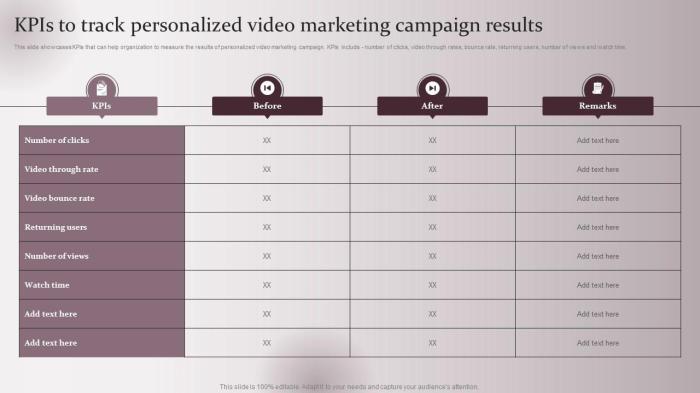
To ensure effective video marketing, several KPIs must be monitored. These metrics highlight audience behavior and content performance. The following are some of the most critical KPIs that should be tracked:

  • View Count: This metric indicates how many times a video has been viewed. It serves as a basic measure of reach and popularity.
  • Watch Time: The total time viewers spend watching a video. A higher watch time suggests engaging content and can impact video ranking on platforms like YouTube.
  • Engagement Rate: This includes likes, comments, shares, and clicks. A higher engagement rate typically signifies that the audience finds the video relevant and compelling.
  • Click-Through Rate (CTR): The percentage of viewers who click on a call to action (CTA) in the video. This KPI measures how effectively the video drives viewers to take the desired action.
  • Conversion Rate: The percentage of viewers who complete a desired action after watching the video, such as signing up for a newsletter or making a purchase.

Tracking these KPIs provides actionable insights into audience preferences and content effectiveness. For example, if a video has a high view count but low engagement, it may indicate that the content is not resonating with the audience, prompting a review of the video’s message or format.

“The true power of video marketing lies in understanding the metrics that drive success and using them to inform future strategies.”

Impact of KPIs on Marketing Strategies

The role of video marketing KPIs extends into broader marketing strategies, directly influencing content planning and audience engagement tactics. By consistently monitoring these metrics, marketers can identify trends and patterns that inform their approach.For instance, analyzing watch time and engagement rates can reveal which content topics resonate the most with the target audience. This information can guide future video production, ensuring that marketing efforts are aligned with viewer interests.

Additionally, understanding CTR and conversion rates can help in refining CTAs and optimizing landing pages for better performance.In practical terms, a company that discovers through KPI analysis that tutorials generate higher engagement can pivot its content strategy to focus more on educational videos. This shift not only enhances viewer satisfaction but can also lead to increased loyalty and customer retention.In summary, the strategic use of video marketing KPIs is crucial for driving growth and achieving business objectives.

By leveraging these metrics, marketers can develop more effective and targeted video content, ultimately leading to improved marketing success.

Measuring Engagement and Performance
Video marketing KPIs to track

Understanding how to measure engagement and performance in video marketing is essential for optimizing your campaigns. Engaging videos not only capture attention but also drive conversions, making it vital to track specific key performance indicators (KPIs). By analyzing these metrics, businesses can refine their strategies and enhance viewer satisfaction.

Calculating Viewer Retention Rates

Viewer retention rate is a crucial metric that indicates how well your video keeps the audience engaged over time. It can be calculated using the following formula:

Viewer Retention Rate = (Total Watch Time of the Video / Total Length of the Video) x 100

To effectively calculate viewer retention rates, consider the following methods:

Utilize Video Analytics Tools

Platforms like YouTube and Vimeo offer built-in analytics that provide insights into viewer retention at different timestamps in your videos, revealing where viewers drop off.

Segment Analysis

Analyze retention by segments, assessing how different demographics engage with your content. This can highlight which segments resonate most with your audience.

A/B Testing

Experiment with various content styles and lengths to compare retention rates, allowing for data-driven decisions about what works best for your audience.

Analyzing Click-Through Rates (CTR) for Video Campaigns

Click-Through Rate (CTR) is a key indicator of how effectively your video prompts viewers to take action, such as clicking on a call-to-action (CTA) button. To analyze CTR for your video campaigns, follow these guidelines:

CTR Calculation

Use the formula below to calculate your CTR:

CTR = (Total Clicks on CTA / Total Impressions) x 100

Evaluate Different Platforms

Different video marketing platforms may provide varying CTRs. Analyze the performance on each to identify which channels yield the best results.

Enhance Your Video CTAs

Test different CTAs within your videos, including placement, wording, and design, to see which options drive higher CTRs. This experimentation can lead to significant improvements in viewer action.

Benchmarking Video Performance Against Industry Standards

Benchmarking your video performance against industry standards provides valuable context for your results. Here are important steps to effectively benchmark:

Research Industry Averages

Gather data from credible sources to find the average viewer retention rates and CTRs for your specific niche. For example, the average CTR for video ads in the retail industry is around 1.84%, while in the technology sector, it may be higher, around 2.38%.

Set Realistic Goals

Use industry benchmarks to set achievable performance goals. Aim to exceed these benchmarks gradually, aligning your objectives with realistic expectations grounded in industry data.

Analyze Competitor Performance

Keep an eye on how your competitors’ videos perform. Tools like SEMrush or Social Blade can provide insights into their engagement metrics, allowing you to adjust your strategy accordingly.By measuring engagement effectively and comparing your performance against industry standards, you can refine your video marketing strategies, ensuring your content resonates with viewers and drives desired actions.

Tools and Techniques for Tracking KPIs

In the dynamic landscape of video marketing, choosing the right tools and techniques for tracking your KPIs is essential for success. With various analytics platforms available, understanding which ones provide the most value can significantly impact your marketing strategy. This section delves into popular tools and effective techniques that can help marketers accurately measure their video performance.

Popular Tools for Measuring Video Marketing KPIs

Using the right tools can streamline the process of tracking video marketing KPIs, offering insights that are critical for refining strategies. Below are some widely-used platforms along with their core features:

  • Google Analytics: A robust tool that can track user engagement, traffic sources, and conversion rates across video content.
  • TubeBuddy: Ideal for YouTube creators, this tool provides insights into video performance, optimization, and audience engagement metrics.
  • Vidyard: A video hosting platform that offers detailed analytics, including heatmaps for viewer engagement and viewer demographics.
  • Wistia: Tailored for businesses, Wistia provides in-depth video analytics, lead generation tools, and integrations for marketing automation.
  • Vimeo Analytics: Offers insights into viewer behavior and engagement, allowing users to track how videos perform on their platform.

Effective Techniques for Real-Time Tracking and Reporting

Real-time tracking can provide immediate insights into how video content is performing, enabling marketers to adjust strategies promptly. Implementing these techniques ensures that KPIs are monitored effectively:

  • Dashboards: Create customized dashboards using tools like Google Data Studio or Tableau to visualize real-time data at a glance.
  • Alerts: Set up alerts for significant metric changes to respond quickly to fluctuations in viewer engagement or drop-off rates.
  • Live Reporting: Utilize live reporting features provided by platforms like Vidyard to keep stakeholders updated on video performance during campaigns.
  • API Integrations: Leverage API tools to integrate data from various platforms for a comprehensive view of your video marketing performance.

Comparison of Top Video Analytics Platforms

When considering which platform to use for measuring video marketing KPIs, it’s helpful to compare their features and pricing. Below is a comparison table that Artikels key aspects of some leading video analytics tools:

Platform Core Features Pricing
Google Analytics Traffic analysis, audience insights, conversion tracking Free with premium options
TubeBuddy YouTube optimization, tracking, analytics Starting at $9/month
Vidyard Video hosting, heatmaps, lead capture Free tier available; paid plans start at $15/month
Wistia Video marketing tools, detailed analytics, integrations Starting at $99/month
Vimeo Analytics Viewer insights, engagement metrics, customizable player Free with basic features; Pro plans start at $20/month

“Choosing the right video analytics platform can transform your video marketing strategy and enhance engagement.”

Last Word

Video marketing KPIs to track

In summary, effectively tracking video marketing KPIs can transform your approach to content creation and audience engagement. By understanding and utilizing these metrics, businesses can refine their strategies, ensuring they resonate with their target audience and drive tangible results.

Clarifying Questions

What are the most important video marketing KPIs?

The most important KPIs include viewer retention rates, click-through rates (CTR), and engagement metrics such as likes, shares, and comments.

How can I improve my video engagement?

Improving video engagement can be achieved by focusing on quality content, optimizing video length, and using compelling calls to action.

Why is benchmarking video performance important?

Benchmarking allows you to compare your video’s performance against industry standards, helping to identify areas for improvement and set realistic goals.

What tools can I use to track video KPIs?

Popular tools include Google Analytics, YouTube Analytics, and specialized video analytics platforms like Wistia and Vidyard.

How often should I review my video marketing KPIs?

It’s recommended to review your video marketing KPIs regularly, ideally after each campaign, to assess performance and adjust strategies accordingly.


How to rank on Google in 2025 with Proven Strategies

How to rank on Google in 2025

How to rank on Google in 2025 is a critical question for anyone looking to enhance their online presence. As we approach a new era of digital marketing, understanding the evolving landscape of search engine optimization and marketing strategies is essential for success. This guide delves into effective methods and innovative trends that can help businesses secure their spot on the coveted first page of Google results.

From search engine marketing strategies to the latest web design trends, we’ll explore how various elements, such as social media engagement and video marketing, play a significant role in boosting visibility and driving traffic. By being proactive and adapting to the rapidly changing digital environment, you can position your website for maximum exposure and relevance in 2025.

Search Engine Marketing Strategies

In the ever-evolving landscape of digital marketing, Search Engine Marketing (SEM) remains a pivotal approach that enhances online visibility. As we look toward 2025, businesses must adapt their SEM strategies to meet the changing expectations of consumers and advancements in technology. Effective SEM not only includes search engine optimization but also focuses heavily on paid advertising strategies that can significantly elevate a brand’s presence in search results.One of the most effective methods to maximize online visibility through paid advertising is the use of pay-per-click (PPC) campaigns.

These campaigns allow businesses to bid on specific s that potential customers are searching for, ensuring that their ads appear prominently in search engine results. It’s crucial for advertisers to optimize their PPC strategies by continuously testing ad copy, experimenting with different landing pages, and leveraging A/B testing to identify the most effective combinations.

Targeting Specific Demographics in Online Campaigns

Targeting specific demographics in online campaigns is essential for maximizing the efficiency and effectiveness of SEM efforts. By focusing on a well-defined audience, businesses can ensure that their ads reach individuals who are more likely to convert.The importance of demographic targeting can be highlighted by the following points:

  • Increased Conversion Rates: Tailoring messages based on age, gender, location, and interests can lead to more relevant ads that resonate with specific audiences, resulting in higher conversion rates.
  • Cost Efficiency: By targeting only those demographics most likely to engage with the product or service, businesses can reduce ad spend waste, ensuring that every dollar spent is aimed at potential customers.
  • Improved Customer Insights: Analyzing demographic data allows businesses to gain insights into their target audience’s preferences, enabling them to refine their marketing strategies for better alignment with consumer behavior.

Trends in Paid Search and Display Advertising for 2025

As we move into 2025, several trends are shaping the landscape of paid search and display advertising. Staying ahead of these trends is crucial for businesses looking to maintain a competitive edge.The following trends are noteworthy:

  • Increased Use of Artificial Intelligence: AI is transforming how ads are created, targeted, and optimized. Automated bidding strategies and personalized ad experiences are expected to become standard practices.
  • Focus on Video Content: With the rise of platforms like TikTok and the increasing consumption of video content, advertisers are leveraging video ads to capture audience attention more effectively.
  • Shift to Voice Search: As voice-activated devices become more prevalent, optimizing ads for voice search queries will become increasingly important, requiring businesses to rethink their strategies.
  • Emphasis on Sustainability: Consumers are becoming more environmentally conscious, prompting companies to adopt sustainable practices and highlight these efforts in their advertising campaigns.

In summary, leveraging effective search engine marketing strategies, targeting specific demographics, and staying abreast of emerging trends are integral components of a successful SEM approach for 2025.

Internet Security Best Practices

As we move into 2025, the importance of robust internet security practices cannot be overstated. With the increasing sophistication of cyber threats, businesses and individuals must adopt stringent measures to protect their online presence. Ensuring the safety of websites and sensitive data is essential for maintaining trust and facilitating smooth online transactions.To effectively shield websites from cyber threats, various essential measures must be implemented.

The landscape of internet security is constantly evolving, underscoring the need for updated strategies. Here are some critical practices to bolster your website’s defenses:

Essential Measures for Website Protection

Implementing security protocols is crucial for safeguarding websites against potential cyber attacks. Here are key strategies to consider:

  • Regular Software Updates: Keeping all website software, plugins, and themes up-to-date helps protect against vulnerabilities that hackers exploit.
  • Strong Password Policies: Enforcing complex password requirements and encouraging regular changes reduces the risk of unauthorized access.
  • Web Application Firewalls (WAF): Utilizing WAFs helps monitor and filter incoming traffic, blocking malicious requests before they reach your website.
  • Backup Solutions: Regularly backing up website data ensures that information can be restored quickly in case of an attack or data loss.
  • Security Audits: Conducting periodic security assessments helps identify vulnerabilities and weaknesses in your website’s infrastructure.

Protocols for Safe Online Transactions

Ensuring secure online transactions is essential for businesses that handle sensitive customer information. Implementing the following protocols significantly enhances transaction security:

  • PCI Compliance: Adhering to Payment Card Industry Data Security Standards (PCI DSS) is vital for businesses that process credit card transactions.
  • Two-Factor Authentication (2FA): Introducing 2FA adds an extra layer of security, requiring users to provide two separate forms of identification.
  • Secure Payment Gateways: Utilizing trusted payment processors that offer encryption and fraud detection helps protect customer financial data.
  • Transparent Privacy Policies: Clearly communicating how customer data is handled builds trust and assures customers that their information is safe.

The Role of Encryption and Secure Connections

Encryption and secure connections play a pivotal role in web security, especially in safeguarding sensitive data. Here’s how they contribute to a safer online environment:

  • SSL Certificates: Utilizing SSL (Secure Socket Layer) certificates encrypts data transmitted between the user’s browser and the server, preventing interception by malicious entities.
  • Data Integrity: Encryption ensures that data remains unaltered during transmission, maintaining its integrity and authenticity.
  • Trust Indicators: Websites using HTTPS (enabled by SSL) display trust indicators, such as padlock icons, reassuring users that their connection is secure.
  • End-to-End Encryption: For messaging platforms and transaction services, end-to-end encryption ensures that only the communicating parties can read the messages, enhancing privacy.

“Implementing strong encryption practices is a cornerstone of maintaining user trust and security in the digital landscape.”

Social Media and Networking Techniques

Social media has become an essential tool for businesses aiming to enhance their online presence and drive traffic to their websites. In 2025, leveraging social platforms effectively can significantly amplify audience engagement and brand visibility. This section explores strategies for maximizing social media’s potential, focusing on audience interaction and the comparative effectiveness of various platforms.

Strategy for Leveraging Social Platforms

To effectively drive traffic to websites through social media, a well-defined strategy is crucial. This involves identifying target audiences, selecting appropriate platforms, and tailoring content to fit each channel’s dynamics. The following key components are vital for a successful approach:

  • Define Your Audience: Understand demographics, interests, and behaviors to create personalized content.
  • Choose the Right Platforms: Select social media channels that align with your target audience—Instagram for visual content, LinkedIn for B2B networking, and TikTok for engaging video material.
  • Content Creation: Produce high-quality, relevant content that resonates with your audience. Utilize infographics, videos, and articles that encourage sharing and interaction.
  • Utilize Paid Advertising: Invest in paid promotions to enhance visibility and reach a broader audience. Target specific demographics and interests to maximize ROI.
  • Track and Analyze Performance: Use analytics tools to monitor engagement metrics and traffic sources, adjusting strategies based on this data for continuous improvement.

Plan for Engaging Audiences through Interactive Content

Engaging audiences is pivotal in fostering brand loyalty and encouraging website visits. Interactive content not only captures attention but also promotes active participation. Key tactics for creating engaging experiences include:

  • Surveys and Polls: Create short, engaging surveys or polls that invite users to share their opinions, providing insights while increasing interaction.
  • Quizzes: Develop fun quizzes related to your brand or industry that provide personalized results, encouraging users to share their outcomes on social media.
  • Live Videos: Host live Q&A sessions or product launches that allow real-time interaction, making audiences feel involved and valued.
  • Contests and Giveaways: Organize contests that require participants to engage with your content (like, share, comment) for a chance to win prizes.

Comparison of Social Media Platforms for Marketing Effectiveness in 2025

Each social media platform offers unique features and reaches different demographics, impacting their effectiveness for marketing. A comparative analysis of major platforms can guide businesses in selecting the right channels for their marketing strategies.

Platform Target Audience Content Type Strengths
Facebook Wide range, especially 25-54 Text, images, videos Large user base, community building
Instagram Primarily 18-34 Visual content, stories Strong engagement, influencer marketing
LinkedIn Professionals, B2B Articles, professional content Networking, lead generation
TikTok Teens and young adults Short videos Viral trends, high engagement
Twitter Wide range, news-focused Text, images, videos Real-time engagement, news sharing

Understanding the strengths and target demographics of each platform can optimize marketing efforts and drive website traffic efficiently.

Video Marketing Innovations

How to rank on Google in 2025

The landscape of digital marketing is ever-evolving, and video marketing continues to be a central pillar in capturing audience attention. With advancements in technology and shifts in user behavior, the impact of video content on engagement metrics is profound. Businesses that effectively harness video can expect to see higher conversion rates, improved brand visibility, and stronger customer connections.Video content significantly enhances user engagement metrics, as platforms like YouTube and TikTok have shown that videos can increase viewer retention and interaction compared to static content.

Studies reveal that users retain 95% of a message when they watch it in a video, opposed to only 10% when reading it in text. This statistic underscores the importance of integrating video into marketing strategies. The demand for visually engaging content is evidenced by the increase in video consumption; more than 80% of consumers prefer video over text, highlighting its effectiveness in communicating messages.

Impact of Video Content on User Engagement Metrics

Engagement metrics are crucial in determining the success of any marketing strategy, and video content excels in this arena. Videos not only capture attention but also encourage shares and interactions.

  • Higher Click-Through Rates: Video thumbnails attract more clicks compared to standard images, leading to increased traffic.
  • Enhanced Social Media Engagement: Videos on social media generate 1200% more shares than text and images combined, fostering community interaction.
  • Improved Performance: Videos can enhance a website’s , as they increase dwell time and reduce bounce rates, signaling to search engines that the content is valuable.
  • Better Conversion Rates: Including videos on landing pages can increase conversions by up to 80%, showcasing the power of video in persuading potential customers.

Optimizing videos for search and reach is essential to maximize their effectiveness. This involves several key strategies that can enhance visibility across platforms.

Guidelines for Optimizing Videos for Search and Reach

To ensure videos reach the intended audience and perform well in search rankings, consider the following guidelines:

  • Utilize Relevant s: Conduct research to identify terms that your audience is searching for and incorporate these into your video title, description, and tags.
  • Craft Engaging Thumbnails: Create visually appealing thumbnails that accurately represent your video content and entice users to click.
  • Include Captions and Subtitles: Adding captions not only makes your content accessible but also can improve as search engines index the text.
  • Promote Across Multiple Channels: Share videos on social media, blogs, and email newsletters to maximize reach and engagement.
  • Utilize Video Sitemaps: Submit a video sitemap to search engines to help them understand your video content and improve indexing.

Emerging trends in live streaming and video storytelling are reshaping the way brands interact with audiences. These innovative approaches offer fresh opportunities for engagement.

Emerging Trends in Live Streaming and Video Storytelling

Live streaming and storytelling are gaining momentum in the digital marketing landscape, with brands using these methods to create authentic connections with their audience.

  • Real-Time Engagement: Live streams allow brands to connect with their audience in real time, fostering a sense of community and urgency. Brands like Nike and Sephora have effectively utilized live streaming to launch products and host interactive events.
  • Behind-the-Scenes Content: Sharing behind-the-scenes videos can humanize a brand, providing audiences with an authentic glimpse into the company culture and processes, thus building trust.
  • Interactive Storytelling: Brands are increasingly leveraging interactive video features, such as polls and Q&As, to enhance viewer participation and engagement.
  • Short-Form Video Content: Platforms like Instagram Reels and TikTok have showcased the power of short, compelling stories that capture attention quickly, making them ideal for brand storytelling.

Leveraging these video marketing innovations can significantly enhance brand visibility and consumer engagement as businesses continue to navigate the digital landscape in 2025.

Web Design and Development Trends

How to rank on Google in 2025

Web design and development play a crucial role in enhancing user engagement and retention. As we head into 2025, understanding the latest design trends is essential for businesses looking to optimize their online presence. A well-designed website not only serves as a digital storefront but also significantly impacts and overall user experience.

Significance of Responsive Design

Responsive design is vital in today’s digital landscape as it ensures that websites function seamlessly across all devices, including mobile phones, tablets, and desktops. With over 50% of web traffic coming from mobile devices, a responsive design approach is necessary to provide an optimal viewing experience. This adaptability improves usability and accessibility, leading to higher engagement and conversion rates.

Checklist for Optimizing User Experience

Creating an exceptional user experience involves several key factors. Here’s a checklist to ensure your website meets user expectations and offers a smooth interaction:

  • Fast loading times: Aim for a loading speed of under three seconds.
  • Intuitive navigation: Ensure menus are easy to locate and use.
  • Clear calls to action: Highlight action buttons to guide users effectively.
  • Consistent branding: Use uniform colors, fonts, and styles throughout the site.
  • Accessible content: Ensure content is readable and accessible for all users, including those with disabilities.

Integrating Advanced Technologies like AI

Incorporating AI technologies into web design can enhance functionality and user engagement. AI can be used for personalized content delivery, chatbots for customer service, and predictive analytics to tailor user experiences. By analyzing user behavior, AI can help in creating responsive layouts that cater to individual preferences, making the website more interactive and user-friendly.

“Web design is not just about aesthetics; it’s about creating an experience that resonates with users and keeps them coming back.”

Adopting these trends ensures that your website remains competitive and appealing in the ever-evolving digital marketplace.

Site Promotion Techniques

Promoting a website effectively in 2025 requires a multi-faceted approach, particularly focusing on off-page strategies. These techniques are essential for increasing visibility and driving traffic, allowing businesses to establish a robust online presence. This involves leveraging various channels and methods to enhance their site’s authority and reach a broader audience.

Off-Page Strategies for Boosting Traffic

Off-page refers to actions taken outside of your own website to impact your rankings within search engine results pages (SERPs). Building a strong off-page strategy is crucial as it helps to establish your site’s credibility and relevance. Below are some effective strategies to boost your website traffic:

Guest Blogging

Contributing high-quality content to reputable blogs in your niche can drive traffic back to your site while also building your authority.

Social Media Engagement

Actively engaging on social media platforms can significantly increase your site’s visibility. Sharing valuable content and interacting with followers encourages shares and boosts referral traffic.

Influencer Collaborations

Partnering with influencers who resonate with your target audience can amplify your reach and enhance your credibility.

Online Communities and Forums

Participating in niche-specific forums or communities can help in sharing your expertise and directing traffic to your website.

Press Releases and Media Coverage

Distributing press releases about significant events or launches can attract media attention, drawing traffic from various channels.

Effective Backlinking Methods for 2025

Building a robust backlink profile is essential for improving search rankings and driving organic traffic. In 2025, the following methods are particularly effective for acquiring quality backlinks:

High-Quality Directory Submissions

Listing your site on relevant and authoritative directories can help in generating quality backlinks.

Resource Page Link Building

Finding resource pages in your niche and requesting inclusion can yield valuable backlinks.

Broken Link Building

Identifying broken links on authoritative sites and suggesting your content as a replacement can create a win-win situation for both parties.

Scholarship Campaigns

Creating a scholarship program can garner backlinks from educational institutions, which are highly valued by search engines.

Content Syndication

Publishing your content on platforms like Medium and LinkedIn can increase visibility and provide backlinks to your site.

Networking Opportunities for Enhancing Site Authority

Networking is key to enhancing your website’s authority, as it fosters relationships with other industry experts and improves your site’s credibility. Engaging in strategic networking can open doors to various promotional opportunities. Consider the following:

Industry Conferences and Webinars

Attending and participating in industry events can help you connect with influencers and potential collaborators.

Online Networking Groups

Joining LinkedIn groups or niche-specific networks allows for sharing insights and gaining referrals.

Collaborative Content Creation

Partnering with other content creators for webinars, eBooks, or podcasts can expose your site to new audiences and enhance credibility.

Speaking Engagements

Positioning yourself as a thought leader by speaking at events can increase your visibility and improve your brand’s authority in the industry.

Networking through Comments and Feedback

Engaging with other websites by leaving insightful comments or providing feedback can lead to reciprocal backlinks and partnerships.

Building a strong online presence in 2025 hinges on a strategic blend of off-page techniques and effective networking.

Summary

In summary, mastering how to rank on Google in 2025 involves a multifaceted approach that encompasses security practices, social media strategies, and innovative content delivery methods. As algorithms continue to evolve, staying informed and agile in your strategies is key to achieving sustained success in search rankings. Embrace the changes and position your website to not only meet but exceed the expectations of users and search engines alike.

Essential Questionnaire

What are the key factors for in 2025?

Key factors include mobile optimization, user experience, high-quality content, and understanding AI-based search algorithms.

How important is social media for ranking on Google?

Social media plays a crucial role in driving traffic and engagement, which can indirectly influence your website’s ranking.

What role does video content play in ?

Video content boosts user engagement metrics and can improve dwell time, both of which are beneficial for .

How can I ensure my website is secure in 2025?

Utilize SSL encryption, keep software up to date, and implement strong security protocols to protect your website.

What are effective backlinking strategies for 2025?

Focus on building relationships with reputable sites, guest blogging, and creating shareable content to earn backlinks.